
Google Ads for Medical Practices: Turn Searches Into Patients
Jump to section
Patients don’t wait around when they need care. They grab their phone, type what they need into Google, compare a few options, and call the provider that looks most credible, convenient, and easy to book.
That’s why Google Ads for medical practices can be one of the fastest ways to generate qualified patient inquiries. But healthcare PPC isn’t like running ads for a restaurant, contractor, or e-commerce store. You’re dealing with patient trust, strict ad policies, HIPAA-aware tracking, competitive keywords, and a landing page that has to convert without making risky claims.
For medical practices in Scottsdale, Phoenix, and across Maricopa County, the goal isn’t just clicks. It’s booked appointments, phone calls, and measurable growth.
Why Google Ads for Medical Practices Work So Well
Medical intent is often urgent. Someone looking for a dermatologist, primary care doctor, chiropractor, med spa, physical therapist, or dental specialist may already be ready to schedule.
That makes paid ads powerful because you can show up at the exact moment patients are comparing local providers.
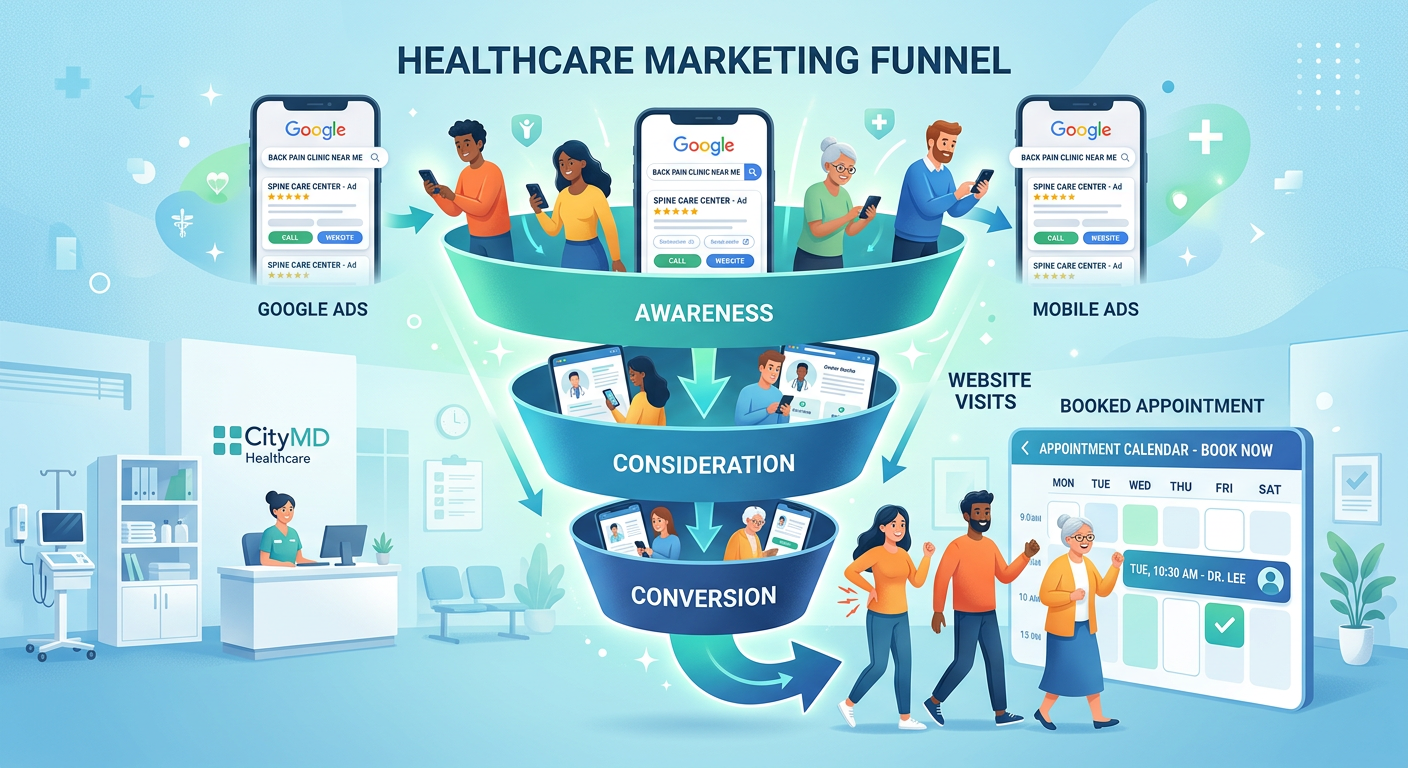
Here’s the thing. Visibility alone doesn’t pay the bills. Your campaign needs to attract the right patients, filter out poor-fit clicks, and guide people into a clean conversion funnel.
A strong medical PPC strategy usually includes:
- High-intent service keywords
- Local targeting by city, ZIP code, or radius
- Clear ad copy with compliant language
- Call-focused campaigns
- Landing pages built for appointment requests
- Conversion tracking that respects privacy
- Ongoing optimization based on lead quality
Bemo Design approaches this as a lead generation system, not a one-off ad campaign. Through Google Ads management, SEO, web design, and AI visibility strategy, we help healthcare providers get found and get chosen.
The Biggest Mistake Medical Practices Make With PPC
Most practices start with a simple idea: “Let’s run ads for our main services.”
That sounds logical, but it’s incomplete.
If your keywords are too broad, you pay for research clicks. If your landing page is generic, people leave. If your tracking only counts form submissions, you miss phone calls. If your ads use language that triggers healthcare restrictions, performance can stall before the campaign even gets traction.
Google’s official healthcare and medicines advertising policy makes it clear that some healthcare content is restricted or limited depending on the location, service, certification status, and claims being made.
So the strategy has to be more careful. Not timid, just smarter.
What a High-Converting Medical Google Ads Campaign Includes
Intent-Based Keyword Strategy
Not every keyword deserves your budget.
A patient typing “doctor near me accepting new patients” is much more valuable than someone typing “what causes back pain.” One is close to booking. The other may just be gathering information.
For medical practices, high-intent PPC keywords often include:
- “primary care doctor near me”
- “dermatologist Scottsdale”
- “physical therapy near me”
- “urgent care Phoenix”
- “chiropractor accepting new patients”
- “medical clinic appointment”
- “same day doctor appointment”
The best campaigns segment these terms by service line, location, and patient intent. That way, your budget supports leads instead of vanity traffic.
Local Targeting That Protects Budget
Medical advertising is often hyperlocal. Patients don’t usually want to drive across the Valley unless the provider is highly specialized.
For a Scottsdale clinic, that may mean prioritizing Scottsdale, Paradise Valley, North Phoenix, Tempe, or select ZIP codes. For a Phoenix practice, the radius may be different based on competition, appointment capacity, and specialty.
A strong local setup should include:
- Radius targeting around your office
- Location-specific ad groups
- Separate campaigns for high-value procedures
- Negative locations when needed
- Call scheduling based on office hours
This is where a local partner matters. A Scottsdale Google Ads agency understands how people move through the local market, which areas convert, and where ad spend gets wasted.
Landing Pages Built for Patient Conversion
Your website homepage is rarely the best PPC landing page.
Patients clicking a medical ad want a fast answer: Can you help me, are you credible, are you nearby, and can I book now?
A strong medical landing page should include:
- One primary service focus
- Clear headline matching the ad
- Clickable phone number
- Simple appointment form
- Provider trust signals
- Insurance or payment information when appropriate
- Location details and office hours
- Reviews or reputation elements
- Mobile-first layout
If the page is slow, cluttered, or vague, your cost per lead rises. If it’s built well, the same ad spend can produce more calls.
That’s why Bemo Design often pairs paid traffic with Scottsdale web design or website redesign work. Better pages create better ROI.
Healthcare Compliance and Tracking Need Extra Care
Medical practices need to be careful with pixels, analytics, forms, and remarketing.
The U.S. Department of Health and Human Services has published guidance on online tracking technologies for HIPAA regulated entities. In plain English, healthcare providers should be cautious about how tracking tools collect and share data, especially when protected health information may be involved.
Google also restricts personalized ads related to sensitive categories, including many health-related topics. Its personalized advertising policy explains that health content can face limits when used for audience targeting.
What does that mean for your practice?
It means your campaign should focus heavily on intent-based Google Ads, clear location targeting, and compliant conversion measurement. It also means you should be cautious with remarketing, audience lists, and tracking setups that weren’t designed for healthcare.
Call Tracking and Lead Quality Matter
A campaign that generates cheap leads but no appointments is not a win.
Medical practices need to know which ads produce:
- Real patient phone calls
- Appointment requests
- New patient bookings
- High-value service inquiries
- Insurance-fit or cash-pay opportunities
Google’s enhanced conversions documentation explains how first-party conversion data can improve measurement. For healthcare, this should be reviewed carefully with privacy and compliance in mind.
The point is simple. You need better data, but you also need responsible data practices.

Why Ads and SEO Should Work Together
Paid ads can generate leads quickly. SEO builds long-term authority. AI visibility helps your practice appear when patients ask tools like ChatGPT, Gemini, Claude, and Google AI for provider recommendations.
That shift matters.
Patients aren’t only looking at blue links anymore. They’re asking AI tools who to trust, which clinic is nearby, and what provider fits their needs. If your practice isn’t visible in those recommendation-style results, you may lose patients before they ever see your website.
Bemo Design combines SEO services with GEO AI SEO so medical practices can compete across Google results and AI answer engines.
The smartest strategy is progressive:
- Use Google Ads to capture immediate demand
- Improve landing pages to convert more traffic
- Build local SEO authority for long-term growth
- Optimize content for AI answer engines
- Track calls, forms, and booked appointments
- Refine campaigns based on real revenue impact
That’s how you move from buying clicks to building a patient acquisition system.
Budgeting for Medical Practice Google Ads
There’s no perfect budget for every practice.
A small local clinic may start with a focused campaign around one or two core services. A multi-location practice may need separate campaigns by location, specialty, and procedure type.
Your budget should depend on:
- Competition in your city
- Specialty and procedure value
- Cost per click in your niche
- Website conversion rate
- Call answer rate
- Appointment availability
- New patient lifetime value
A medical practice with a strong landing page and good phone process can often outperform a larger competitor with sloppy tracking and generic ads.
That’s good news. You don’t always need the biggest budget. You need the sharpest strategy.
Work With a Scottsdale Google Ads Partner That Understands Leads
If your practice is spending money on ads, every click should have a job. It should move a potential patient closer to calling, booking, or choosing your clinic.
Bemo Design helps medical and professional service businesses build campaigns that generate real leads, not just reports. Led by Brian Bemo, our Scottsdale-based team brings 25+ years of hands-on marketing experience across SEO, Google Ads, AI visibility, web design, and conversion optimization.
Ready to improve your patient acquisition strategy? Call (480) 600-2477 or book a free strategy call. You can also run a Free AI SEO Audit to see where your practice stands today.
FAQ
Are Google Ads allowed for medical practices?
Yes, many medical practices can advertise on Google. However, healthcare ads must follow Google’s healthcare policies, local laws, and applicable privacy rules. Some services, terms, claims, and targeting methods may be restricted or require extra review.
How much should a medical practice spend on Google Ads?
It depends on your specialty, location, competition, and patient value. A focused local campaign may start smaller, while competitive specialties in Scottsdale or Phoenix often need a larger budget to gather enough data and generate consistent leads.
Should medical practices use landing pages or their homepage?
Dedicated landing pages usually perform better. They keep the message focused, match the ad intent, and make it easier for patients to call or request an appointment.
Can medical practices use remarketing?
Healthcare remarketing can be sensitive and may be restricted depending on the service, audience, and data being used. Medical practices should review platform policies and privacy obligations before using remarketing or audience-based targeting.
What makes medical PPC different from regular PPC?
Medical PPC has higher trust requirements, stricter policies, more privacy concerns, and often higher cost per click. Success depends on precise keywords, compliant ad copy, strong landing pages, and lead quality tracking.
Do Google Ads help with SEO?
Google Ads do not directly improve organic rankings. But they can reveal which keywords, services, and messages convert best. That data can help guide SEO, content, and AI visibility strategy.
Why hire Bemo Design for medical practice ads?
Bemo Design focuses on lead generation, not vanity metrics. You work with a Scottsdale-based agency led by Brian Bemo, with 25+ years of experience helping businesses get found, chosen, and contacted.
Summary
Google Ads can help medical practices reach patients at the moment they’re ready to book, but success requires more than launching a few keywords. The best results come from compliant campaigns, high-intent targeting, conversion-focused landing pages, and clear call tracking.
For healthcare providers in Scottsdale, Phoenix, and Maricopa County, the real opportunity is building a complete lead generation system that combines PPC, SEO, AI visibility, and better website performance.
Conclusion
Medical marketing is getting more competitive, and patient behavior is changing fast. People compare providers quickly, trust what they see online, and increasingly rely on AI-powered recommendations before making a decision.
If your practice wants more calls, more booked appointments, and stronger local visibility, Google Ads can be a powerful starting point. Just make sure the strategy is built for healthcare, not copied from a generic PPC playbook.
About Bemo Design
Bemo Design is a Scottsdale-based digital marketing agency led by Brian Bemo, specializing in SEO, Google Ads, and AI-powered visibility optimization.
We help businesses get found in Google and AI answer engines, then convert that visibility into real leads, calls, and revenue. With over 25 years of experience, Bemo Design focuses on high-intent strategies, conversion funnels, and measurable results.
Our Core Services:
Ready to Get More Leads?
Call (480) 600-2477
Or run a Free AI SEO Audit