How To Do A Website SEO Audit Yourself: A Simple Guide

A website can look polished and still underperform badly in search. That is why a website SEO audit matters, especially if you want more calls, more leads, and better visibility in both Google and AI search.
Here is the thing. Most business owners do not need to become full-time SEO experts to spot the biggest problems. You just need a clear process, a few free tools, and a sharp eye for what is helping or hurting performance.
Introduction
If you want to do a website SEO audit yourself, start by thinking like a customer and like Google at the same time. Can people find what they need fast? Can search engines understand your pages? And does your site actually encourage someone to call, book, or fill out a form?
That is the real goal. Not just rankings. Not just traffic. You want visibility that turns into revenue.
1. Start With The Basics: Crawlability And Indexing
First, check whether Google can actually access your pages. If important pages are blocked, missing from the index, or buried too deep in your site structure, your SEO will stall before it starts.
Look for these issues:
- Pages that should rank but are not indexed
- Broken links and redirect chains
- Duplicate pages competing with each other
- Missing XML sitemap or messy site structure
Use Google Search Console, then review coverage and indexing reports. If you want a deeper look at how a Scottsdale SEO company approaches technical issues, Bemo Design’s SEO services and GEO AI SEO pages explain the kind of structure that supports both Google and AI visibility.
2. Review Your Keywords And Search Intent
A lot of websites target the wrong terms. They go after broad traffic instead of high-intent searches that actually bring in business.
Ask yourself:
- What does my ideal customer search before they contact me?
- Which pages match service intent, local intent, or buying intent?
- Do my titles and headings reflect what people really want?
For professional services, this matters even more. A dental practice, law firm, med spa, or real estate company should focus on searches that signal action, not casual browsing. That is how you build a lead generation system instead of a vanity traffic report.
3. Check Your On-Page SEO
Your pages should make it easy for both users and search engines to understand what each page is about. That means every important page needs a clear title tag, strong H1, useful subheads, and content that answers the searcher's question.
Focus on:
Title Tags And Meta Descriptions
Make sure each page has one unique title tag and one compelling meta description. Keep them specific, keyword-focused, and written for clicks.
Headings And Content Depth
Each service page should cover the topic fully. If the page is too thin, too vague, or stuffed with unrelated terms, it will struggle.
Internal Linking
Link related pages together so users can keep moving through your site. That also helps search engines understand which pages matter most.
If you want examples of strong service page structure, look at Bemo Design’s web design Scottsdale and website redesign offerings. Those pages are built to support both rankings and conversions.
4. Audit Content Quality And E-E-A-T Signals
Google and AI search systems both reward useful, trustworthy content. If your site sounds generic, outdated, or thin, it will be easy to ignore.
Check for:
- Real expertise and experience
- Clear service explanations
- Local relevance
- Answers to common customer questions
- Updated content that reflects current services and standards
For B2B digital strategy, healthcare, and local service brands, authority matters. That is why Bemo Design emphasizes hands-on leadership from Brian Bemo and 25+ years of experience across SEO, Google Ads, web design, and AI search optimization. You can learn more on the About Bemo Design page and the Brian Bemo page.
5. Test Mobile Experience And Page Speed
If your site is slow or clunky on mobile, you are probably losing leads. Most users will not wait around, and search engines notice that behavior.
Check these areas:
- Mobile layout and tap targets
- Image compression
- Core Web Vitals performance
- Excessive scripts and bloated plugins
- Page load time on key service pages
A simple rule works well here. If the page feels frustrating on your phone, it is likely frustrating your customers too.
6. Evaluate Conversion Elements
This is where many DIY audits fall short. A page can rank and still fail to generate leads.
Your audit should include:
- Clear calls to action
- Visible phone number
- Easy contact forms
- Trust signals like reviews, testimonials, and credentials
- Service-specific landing pages
For businesses that depend on calls, forms, and booked appointments, this step is non-negotiable. Bemo Design’s contact page and free AI SEO audit are good examples of how to guide users toward the next step.
7. Check Local SEO And AI Search Visibility
If you serve a geographic area, local SEO is part of your audit. That means your website should support your Google Business Profile, location signals, service area content, and local trust.
Also, think beyond traditional rankings. Search is shifting from rankings to recommendations. If your business is not showing up in AI-driven search results, you are missing a growing slice of demand.
Bemo Design’s GEO AI SEO services and Google Ads management are designed around that shift, helping brands get found and chosen across Google and AI search platforms.
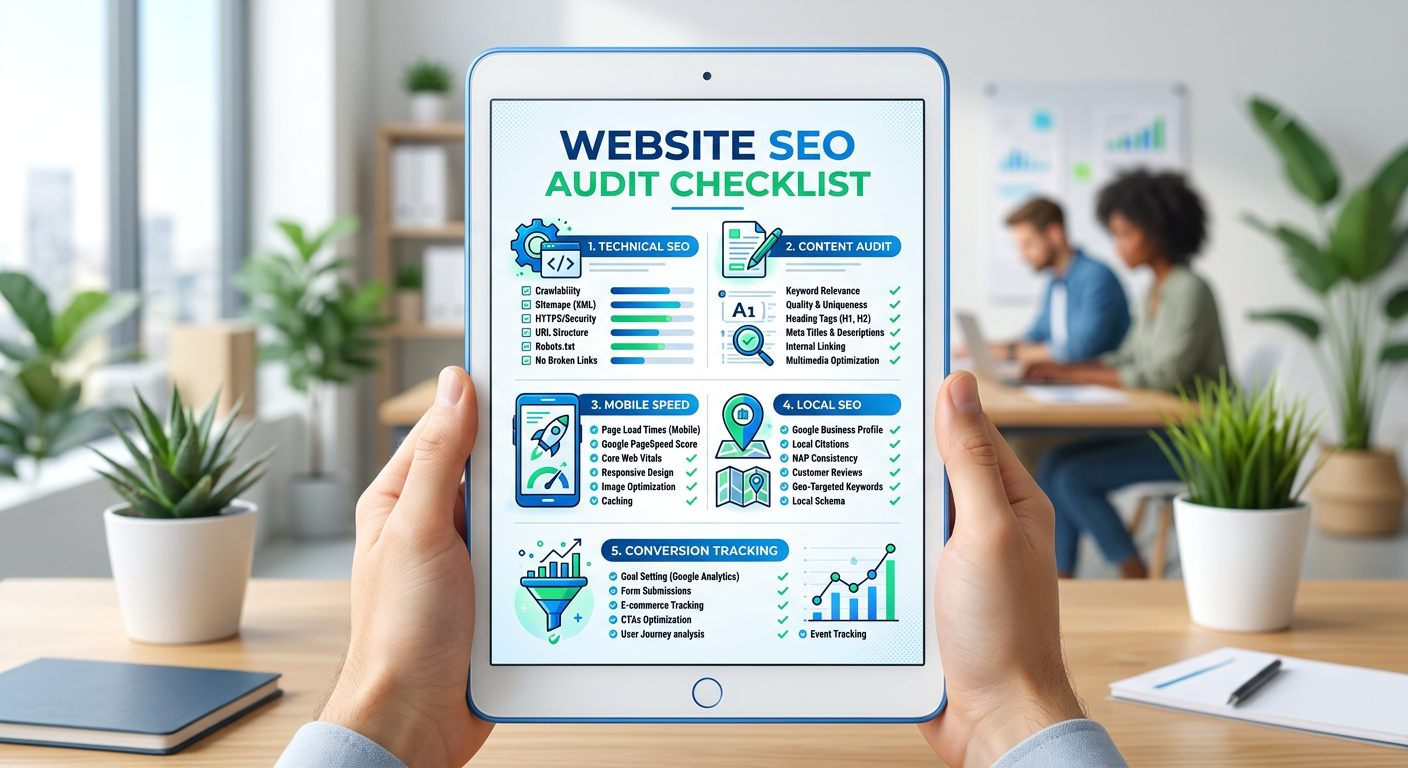
A Simple DIY SEO Audit Checklist
Use this quick pass on every important page:
- Is the page indexed?
- Does the title tag match search intent?
- Is the content helpful and specific?
- Are there internal links to related pages?
- Is the page fast on mobile?
- Is the CTA obvious?
- Does the page support leads, not just traffic?
If you can answer “no” to more than a couple of these, you have work to do.
FAQ
How often should I do a website SEO audit?
A full audit every 3 to 6 months is a smart starting point. If your site is large, competitive, or changing often, review key pages monthly.
What free tools can I use for a DIY audit?
Google Search Console, Google Analytics, PageSpeed Insights, and your browser’s inspection tools are a strong start. They will not replace a full professional audit, but they will show obvious problems.
What is the most common SEO issue on small business websites?
Thin content, weak page structure, and poor conversion setup are extremely common. Many sites have traffic potential but fail to turn visitors into calls.
Does AI search change how I should audit my website?
Yes. You should now audit for clarity, authority, structured content, and trust signals, not just keywords. AI systems tend to reward brands that are easy to understand and credible.
Can I do the audit myself, or should I hire help?
You can absolutely do a basic audit yourself. But if you want to uncover technical problems, content gaps, and lead-generation bottlenecks faster, a specialist can save you time and missed revenue.
What pages should I audit first?
Start with your homepage, top service pages, contact page, and any pages that already bring in leads. Those pages usually have the biggest revenue impact.
Get A Second Set Of Eyes On Your Site
If you want more than a surface-level checklist, Bemo Design can help you turn your website into a real lead generation system. From SEO services and GEO AI SEO to website redesign and Google Ads management, the goal is the same, more visibility, more calls, more revenue.
Call 480-600-2477 or book a free strategy call to get clear next steps. If you want a fast starting point, run a free AI SEO audit and see where your site stands today.
Conclusion
Doing a website SEO audit yourself is one of the smartest things you can do for your business. You do not need to catch every issue on day one. You just need to find the biggest leaks, fix the pages that matter most, and keep improving from there.
If your site is built to rank but not to convert, or if you are invisible in AI search, now is the time to tighten things up. That is where Bemo Design comes in.
About Bemo Design
Bemo Design is a Scottsdale-based digital marketing agency led by Brian Bemo, specializing in SEO, Google Ads, and AI-powered search optimization.
We help businesses get found in Google and AI search and turn that visibility into real leads, calls, and revenue. With over 25 years of experience, Bemo Design focuses on high-intent strategies, conversion funnels, and measurable results.
Our Core Services:
Ready to Get More Leads?
Call 480-600-2477
Book a Free Strategy Call
Or run a Free AI SEO Audit