
How to Get Patients From Google Ads Without Wasting Spend Today
Jump to section
If your practice is paying for clicks but the phone isn’t ringing, the problem probably isn’t Google Ads itself. The problem is usually weak intent targeting, poor tracking, thin landing pages, or ads that attract shoppers instead of ready-to-book patients.
That’s why how to get patients from Google Ads is less about launching a campaign and more about building a patient acquisition system. You need the right keywords, the right message, a fast path to book, and enough tracking to know which calls became real appointments.
Here’s the thing, patients don’t wake up wanting to fill out your marketing form. They want relief, confidence, availability, and proof that your practice is the right choice. Your ads need to meet them at that exact moment.
Google Ads Patient Growth At a Glance
| Campaign Element | What It Does | Best Practice | Main Metric |
|---|---|---|---|
| High-intent keywords | Finds ready patients | Use service plus location | Calls booked |
| Landing pages | Builds trust fast | One service per page | Conversion rate |
| Call tracking | Shows real lead quality | Track calls and forms | Cost per booked patient |
| Negative keywords | Cuts wasted spend | Block job, school, free | Lower cost per lead |
| Reviews and proof | Reduces hesitation | Feature real reputation signals | Appointment rate |
Google’s own Economic Impact FAQ says its former chief economist estimated advertisers receive about two dollars in value for every one dollar spent on Google Ads, using the lower end of the range to stay conservative. That’s useful context, but healthcare and dental practices only see strong ROI when the account is built around booked appointments, not vanity clicks.
Start With Patient Intent, Not Keyword Volume
A big mistake practices make is chasing broad terms because they look popular. Keywords like “dentist,” “doctor,” or “med spa” can burn through budget fast because they don’t always reveal what the person needs right now.
Better campaigns focus on bottom-of-funnel intent. Think “emergency dentist near me,” “dental implants Scottsdale,” “same day crown Phoenix,” “dermatologist appointment near me,” or “chiropractor for back pain near me.” These phrases show urgency, local intent, and a clear service need.
Build Campaigns Around Services
Don’t throw every procedure into one campaign. Separate campaigns by service line so your budget, ads, and landing pages match the patient’s need.
For example, a dental practice might split campaigns into:
- Emergency dentistry
- Dental implants
- Invisalign or clear aligners
- Cosmetic dentistry
- New patient exams
- Pediatric dentistry
A medical or wellness practice can do the same for consultations, treatments, specialties, and high-value services. This structure makes optimization cleaner because you can see exactly which service drives calls, forms, and booked visits.
Send Clicks to the Right Landing Page
Your homepage is rarely the best place to send paid traffic. It usually has too many choices, too much general information, and not enough focus on the specific service the patient clicked for.
A strong healthcare landing page should answer three questions fast: Can you help me, can I trust you, and how do I book? If visitors have to hunt for the answer, they’ll leave and click another practice.
What Every Patient Landing Page Needs
Use this checklist before spending heavily:
- Clear headline matching the ad
- Clickable phone number near the top
- Online booking or simple form
- Insurance, financing, or payment details when relevant
- Reviews, credentials, and trust badges
- Photos of the provider or office
- Location and service area details
- Short FAQ section
- Fast mobile load speed
If your page looks outdated, loads slowly, or feels generic, you’ll pay more for fewer appointments. That’s where conversion-focused website redesign can make a major difference.
Use Call Tracking Like Your Budget Depends on It
Because it does.
You can’t improve what you can’t measure. For patient acquisition, basic form tracking isn’t enough because many high-intent patients call directly from the ad or landing page.
Set up tracking for:
- Calls from ads
- Calls from landing pages
- Form submissions
- Online appointment clicks
- Map and direction clicks when relevant
- Booked appointment outcomes
The last item matters most. A campaign that generates 40 cheap leads but only two real appointments is weaker than a campaign that generates 15 higher-cost leads and 10 booked patients.
Write Ads That Pre-Qualify Patients
Good healthcare ads don’t just get clicks. They filter out the wrong clicks and encourage the right people to act.
Your ad copy should highlight practical decision factors, such as same-week appointments, emergency availability, financing, insurance accepted, provider experience, local convenience, or specific treatment outcomes. Avoid vague claims like “best care” or “top provider” unless you can support them.
Ad Copy Examples
For a dental implant campaign:
“Dental Implant Consultations in Scottsdale. Experienced Team, Clear Pricing, Financing Available. Call Today.”
For an urgent care campaign:
“Same-Day Medical Visits in Phoenix. Convenient Appointments, Local Providers, Easy Booking.”
For a cosmetic dentistry campaign:
“Smile Makeovers in Scottsdale. Custom Cosmetic Dentistry, Modern Office, Schedule a Consultation.”
Notice the pattern. Specific service, local relevance, trust signal, and a clear next step.
Cut Waste With Negative Keywords
Negative keywords are one of the fastest ways to improve patient lead quality. Without them, your ads may show for people looking for jobs, training, definitions, free services, school programs, or DIY advice.
Start with negatives like:
- jobs
- salary
- school
- course
- free
- DIY
- meaning
- definition
- certification
- cheap, if your practice is premium positioned
Review actual query data every week. If you see irrelevant terms, block them quickly before they drain the budget.
Connect Google Ads With SEO and AI Visibility
Paid ads can bring fast patient leads, but long-term growth comes from owning more of the decision journey. Patients often compare your ad, reviews, website, maps listing, and AI-generated recommendations before calling.
That’s why Google Ads works best alongside SEO services and GEO AI SEO services. Ads capture urgent demand now, while organic visibility and AI answer visibility build authority over time.
For Scottsdale, Phoenix, and Maricopa County practices, this matters even more. Local competition is high, and patients are often choosing between several providers within minutes.
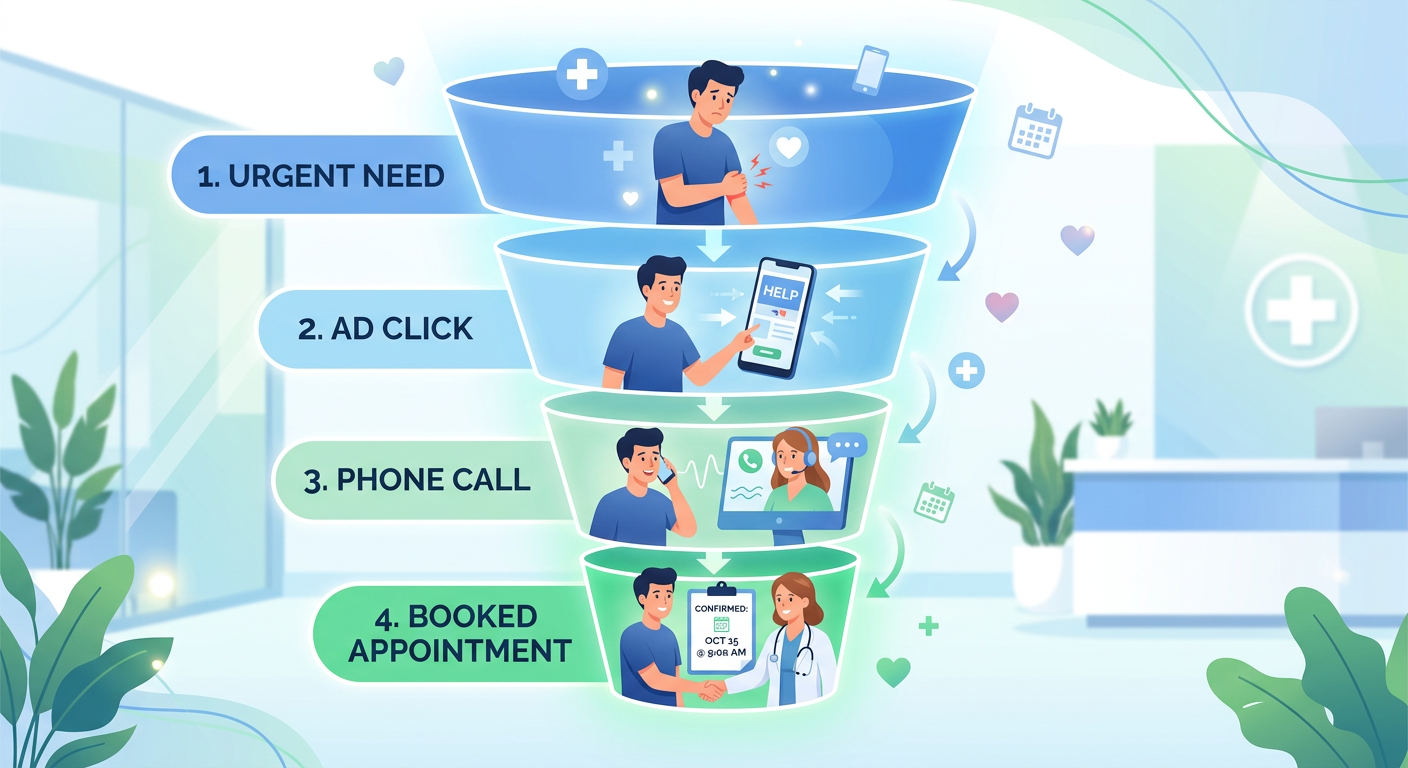
How to Get Patients From Google Ads With a Better Funnel
The strongest campaigns use a simple but disciplined funnel:
- Target high-intent local keywords
- Match each ad to one clear service
- Send traffic to a focused landing page
- Make calling and booking effortless
- Track lead quality, not just lead volume
- Follow up fast with missed calls and forms
- Use SEO and AI visibility to build trust around the ads
Speed matters here. If a patient fills out a form and waits two days for a reply, your competitor may already have the appointment booked.
Common Mistakes That Keep Practices From Getting Patients
Most underperforming accounts have the same problems. They use broad match keywords too aggressively, run ads across too wide of a geography, send clicks to weak pages, and judge success by clicks instead of booked appointments.
Another common issue is letting Google’s automated recommendations run the account without human judgment. Automation can help, but it needs guardrails, clean data, and a clear business goal.
A hands-on manager should review spend, queries, calls, form quality, appointment data, and landing page performance regularly. Set-it-and-forget-it PPC is how practices waste money.
Let Bemo Design Build a Patient Lead System
If you want more qualified patient calls from Google Ads, work with a team that understands both traffic and conversion. Bemo Design’s Google Ads management combines daily optimization, landing page strategy, call tracking, and 25+ years of hands-on digital marketing experience led by Brian Bemo.
Call (480) 600-2477 or book a free strategy call. You can also run a Free AI SEO Audit to see how visible your practice is across Google and AI answer platforms.
Frequently Asked Questions
How much should a medical or dental practice spend on Google Ads?
Most practices should start with enough budget to collect meaningful data, not just a few clicks. For many local practices, that often means a practical test budget tied to service value, competition, and location. A high-value implant, cosmetic, or specialty medical service can usually support a higher cost per lead than a low-margin appointment.
How long does it take to get patients from Google Ads?
You can start getting calls quickly once campaigns go live, but profitable optimization usually takes several weeks of data. The first phase is about learning which keywords, ads, pages, and locations produce real booked appointments.
Should I use a landing page or my homepage?
Use a dedicated landing page for each priority service whenever possible. It keeps the message focused, improves trust, and gives patients fewer distractions before calling or booking.
Are Google Ads worth it for dentists and medical practices?
Yes, when campaigns are built around appointment value and lead quality. They’re not worth it when you only track clicks, use broad targeting, or send traffic to a weak website.
What is the best way to lower cost per patient?
Improve the whole funnel. Better keywords, stronger negative keyword lists, more relevant ads, faster landing pages, stronger reviews, and better call handling can all reduce wasted spend.
Can Google Ads work with AI SEO?
Yes. Google Ads helps capture immediate demand, while AI SEO and GEO help your practice become more visible in AI answer tools and organic results. Together, they build both short-term leads and long-term authority.
Summary
Getting patients from Google Ads takes more than buying traffic. You need focused service campaigns, local intent keywords, strong landing pages, real call tracking, and fast follow-up.
The practices that win are the ones that measure booked appointments, not just leads. Build the funnel correctly, and Google Ads can become one of your most reliable patient growth channels.
Final Takeaway
If you’re wondering how to get patients from Google Ads, start by tightening the match between patient intent, ad message, landing page, and follow-up. Every weak link costs you money.
The right campaign doesn’t just bring more visitors. It brings the right patients, at the right moment, with a clear path to book.
About Bemo Design
Bemo Design is a Scottsdale-based digital marketing agency led by Brian Bemo, specializing in SEO, Google Ads, and AI-powered visibility optimization.
We help businesses get found in Google and AI answer platforms, then convert that visibility into real leads, calls, and revenue. With over 25 years of experience, Bemo Design focuses on high-intent strategies, conversion funnels, and measurable results.
Our Core Services:
Ready to Get More Leads?
Call (480) 600-2477
Book a Free Strategy Call
Or run a Free AI SEO Audit