Avoid Common Dental SEO Mistakes: Practical Fixes for Dentists

![Header image]
Avoid common dental seo mistakes if you want steady patient growth, better ad ROI, and fewer missed leads. Picture this: a busy dental practice in Scottsdale that has great reviews but shows up nowhere on page one. That was my client on Day 6 of their early stage growth plan, until we fixed five small but high-impact errors, and their booking calls went up in 30 days. This article is for small to mid-sized businesses, professional service providers, and established brands looking to grow through SEO, AI-powered search optimization, and Google Ads management. Ideal clients include dental and medical practices, real estate firms, and local service businesses in Scottsdale, Phoenix, and across Maricopa County looking for modern websites and better ROI.
Avoid Common Dental SEO Mistakes: Quick Wins
Here are the repeatable fixes that solve the most common problems fast. Use them as a checklist when auditing your site or Google Business Profile.
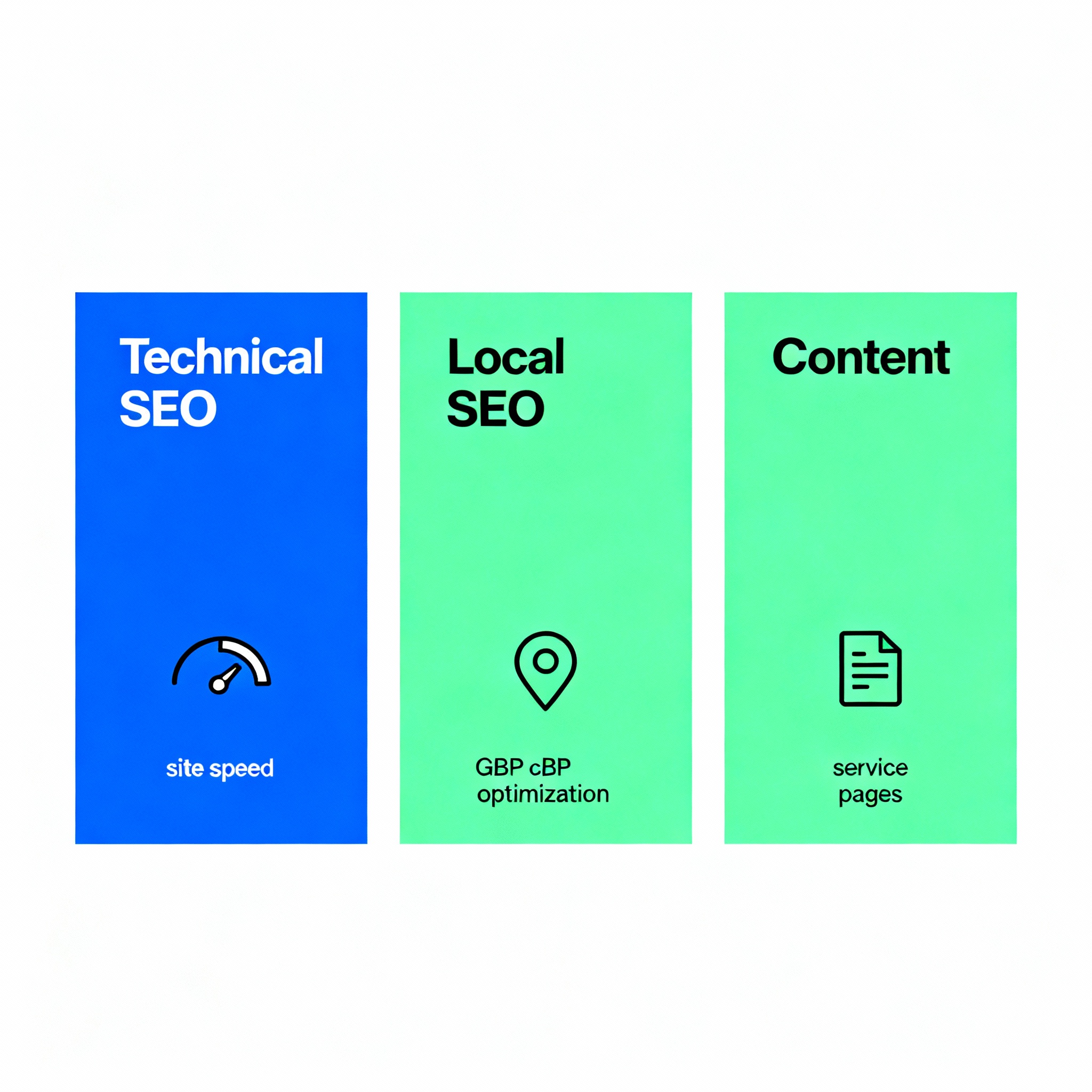
1. Missing or messy Google Business Profile
- Claim and verify your profile, then complete every field, including business hours, services, and high-quality photos. Google prioritizes completeness. See Google Business Profile help for details.
- Use consistent business name, address, and phone across your site and citations, this reduces confusion for local ranking.
- Regularly request reviews and respond to them, since engagement influences local visibility.
Quick takeaway: a half-complete profile is worse than a polished one.
2. Weak, thin, or duplicate service pages
- Create dedicated service pages for each key treatment, such as "dental implants" or "cosmetic dentistry", with 500 to 1,200 words focused on patient benefits.
- Avoid copying vendor content or manufacturer text, search engines penalize duplicate content.
- Add local signals on each page, like neighborhood mentions, patient stories, and FAQ sections.
Example: swap a single generic "Services" page for dedicated pages, each optimized around one patient question.
3. Technical issues that kill crawlability
- Fix crawl errors, ensure pages return 200 status, and remove soft 404s. Use Google Search Central for technical best practices.
- Optimize site speed, especially on mobile. Slow pages lose patients and paid clicks.
- Ensure a clean URL structure and canonical tags to prevent index bloat.
Quick tools: Google Search Console and PageSpeed Insights are basic must-haves.
4. Bad schema and missing local markup
- Implement LocalBusiness schema and Service schema so generative engines and search result features can read your info easily. Schema.org documents the recommended properties.
- Add structured markup for reviews, openingHours, and acceptedPaymentMethods where relevant.
Why it matters: structured data helps feeds, voice assistants, and AI summarizers surface your practice.
5. Tracking and attribution gaps
- Tag your paid and organic campaigns properly using UTM parameters, and connect Google Ads to Google Analytics.
- If calls are the main conversion, use call-tracking and forward numbers that still display your real NAP.
- Without proper attribution, you’ll underinvest in channels that actually drive revenue.
6. Neglecting local content and proximity intent
- Create geo-targeted pages or blog posts for neighborhoods you serve in Phoenix and Maricopa County.
- Use patient stories, case studies, and local community content to build topical authority.
- Optimize title tags and meta descriptions for local queries like "dentist in Scottsdale near McDowell."
7. Overlooking paid search fundamentals for dental ads
- Align landing pages to ad groups, maintain strong Quality Scores, and use ad extensions like call and location. Google Ads help explains ad extensions and best practices.
- Track lifetime value and patient acquisition cost, not just clicks.
- Avoid sending paid traffic to a homepage, send them to focused treatment pages with clear CTAs.
8. Blind trust in generic SEO tools
- Tools are helpful, but human review reveals patient experience issues and conversion blockers.
- Use audits from reputable sources, and validate with user testing or call mystery shopping.
AI SEO, GEO AI SEO, and Generative Engine Optimization
AI search is changing how patients find practices, and generative responses often pull from knowledge graphs and authoritative local listings.
- Keep your structured data and GBP pristine, so AI models source accurate facts.
- Create authoritative FAQ content that answers conversational queries, this helps with voice search and AI snippets.
- Monitor brand mentions and correct erroneous facts on directories, since AI can repeat them.
Helpful reads: BrightLocal has practical local SEO research, and Search Engine Journal covers AI search trends.
Conversion and UX fixes that actually increase patients
- Make scheduling obvious, mobile-friendly, and fast. Test the booking flow monthly.
- Use patient-focused language, social proof near CTAs, and trust signals like accreditations.
- Reduce friction by pre-filling forms where possible and offering click-to-call on mobile.
Measurement, testing, and ongoing optimization
- Run A B tests on high-traffic pages, then scale winners.
- Set realistic KPIs: organic appointments, qualified leads, cost per acquisition, and lifetime patient value.
- Schedule quarterly SEO audits, and review Google Business Profile insights monthly.
Quick checklist to download and use today
- Claim and fully complete your Google Business Profile.
- Build dedicated service pages with local intent.
- Fix site speed and mobile rendering issues.
- Add LocalBusiness schema and review markup.
- Track calls and form conversions with UTM tagging.
- Align Google Ads landing pages and measure LTV.
Conclusion and next steps
Here’s the thing, small fixes add up. If your site feels like it should rank but it does not, start with GBP completeness, fix the fastest technical items, then focus content on patient needs and locality. If you want help, start with a targeted website SEO audit and a 30 day priority fix list, and measure patient calls before and after. For hands-on guidance, consider connecting with a Scottsdale marketing agency that understands local dental markets and PPC optimization.
Resources and further reading:
- Google Business Profile Help
- Google Search Central
- Schema.org LocalBusiness
- Moz Beginner's Guide to SEO
- BrightLocal Local Consumer Review Survey
- Search Engine Journal

If you want, I can build a prioritized 30 day fix list based on a quick audit of your site and Google Business Profile. Want me to check yours?