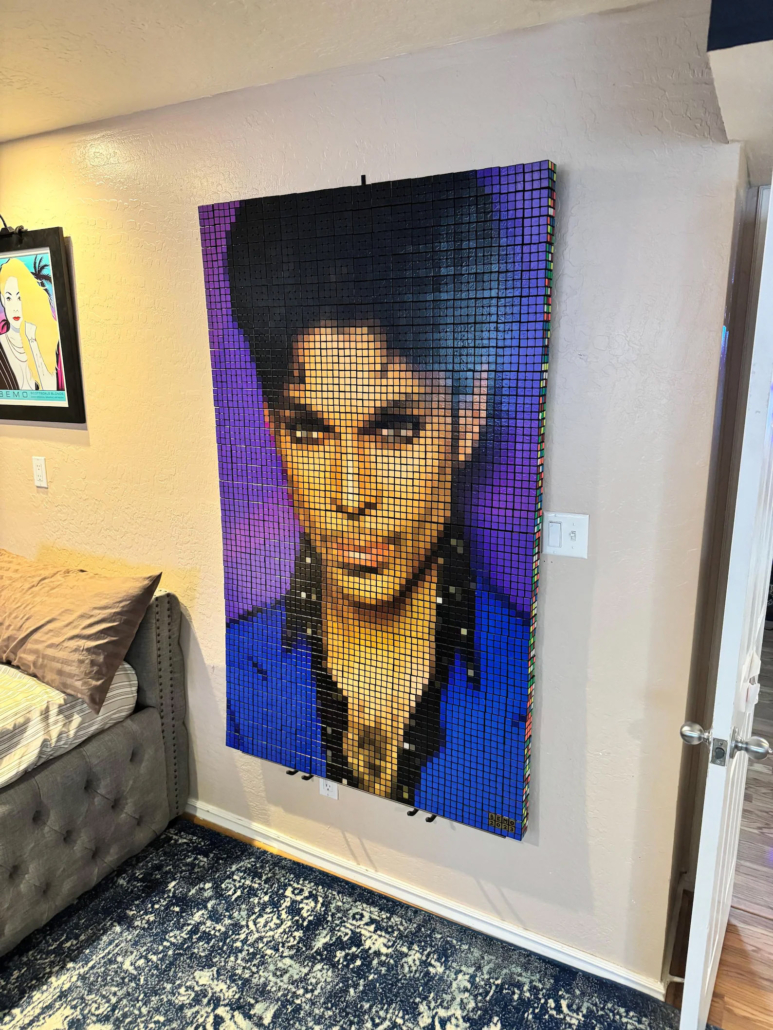
The important view may be from the entrance, a staircase or across an open-plan room. Photograph those approaches and record the clear wall dimensions. Furniture, railings and architectural lines affect how a large artwork is framed by the space.
02
Proportion matters more than filling every inch.
A two-story wall does not always need a two-story piece. Negative space can make a portrait or graphic composition more powerful. Brian can discuss vertical, horizontal or multi-part approaches around the room’s proportions. A visual study helps compare placement before material and dimensions are finalized.
03
Plan handling at the same time as design.
Oversized physical artwork may require specialist packing, freight, lifting or installation. Doorways, elevators, stairs and the wall structure can determine what is practical. Include those constraints early rather than discovering them after fabrication.
The medium is selected for the concept and setting. Full-size cube mosaics offer physical depth but carry substantial weight; another format may be more appropriate for a particular site.
YOUR PROJECT
Tell Brian what you have in mind.
Share the subject, approximate dimensions, display location and timing in the existing inquiry form. Mention that your project is an art commission. Brian will discuss the idea, current availability and the appropriate next step before a scope is agreed.
Yes, the concept can be reviewed with dimensions, photographs and site information. Access, support, installation and viewing distance need to be established before a final size is accepted.
What should I send first?
Start with the subject or idea, approximate dimensions, a description of the space, your location and desired timing. Brian can explain which reference images or site details will help next.
Independent artwork by Brian Bemo. No affiliation with or endorsement by depicted artists, estates or brands is implied. Commercial and room mockups are concepts where labeled.