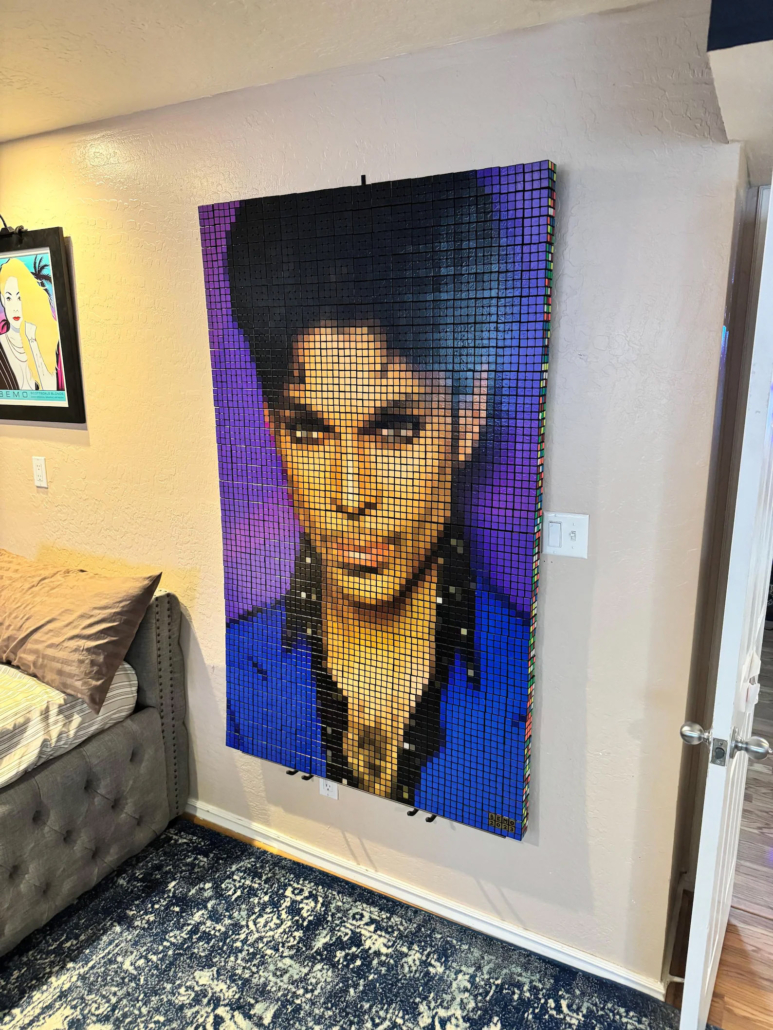
A collector’s history, a meaningful portrait or a concept tied to the architecture can make a piece specific to its owner. The value is in that relationship between idea, material and place. Size alone does not make a statement; a confident composition and thoughtful placement do.
02
Define what one-of-a-kind means for your project.
An original physical object, an exclusive design and a limited digital edition are different arrangements. Discuss originality, reproduction permissions, signatures and any edition expectations before the commission begins. These details belong in the project agreement rather than being assumed from a marketing label.
03
Give the work enough room.
A strong piece needs breathing space, an appropriate viewing distance and considered lighting. Bring photographs of surrounding furniture and existing art so Brian can understand the collection. A quieter setting may let intricate cube detail become the conversation; a larger room may call for a simpler, more forceful composition.
Commission availability is limited by the hand work and current schedule. The conversation establishes whether the idea, medium and timing are a good fit.
YOUR PROJECT
Tell Brian what you have in mind.
Share the subject, approximate dimensions, display location and timing in the existing inquiry form. Mention that your project is an art commission. Brian will discuss the idea, current availability and the appropriate next step before a scope is agreed.
Discuss exclusivity and reproduction rights before commissioning. The agreed terms should distinguish ownership of the physical piece from any rights to reproduce the design.
What should I send first?
Start with the subject or idea, approximate dimensions, a description of the space, your location and desired timing. Brian can explain which reference images or site details will help next.
Independent artwork by Brian Bemo. No affiliation with or endorsement by depicted artists, estates or brands is implied. Commercial and room mockups are concepts where labeled.