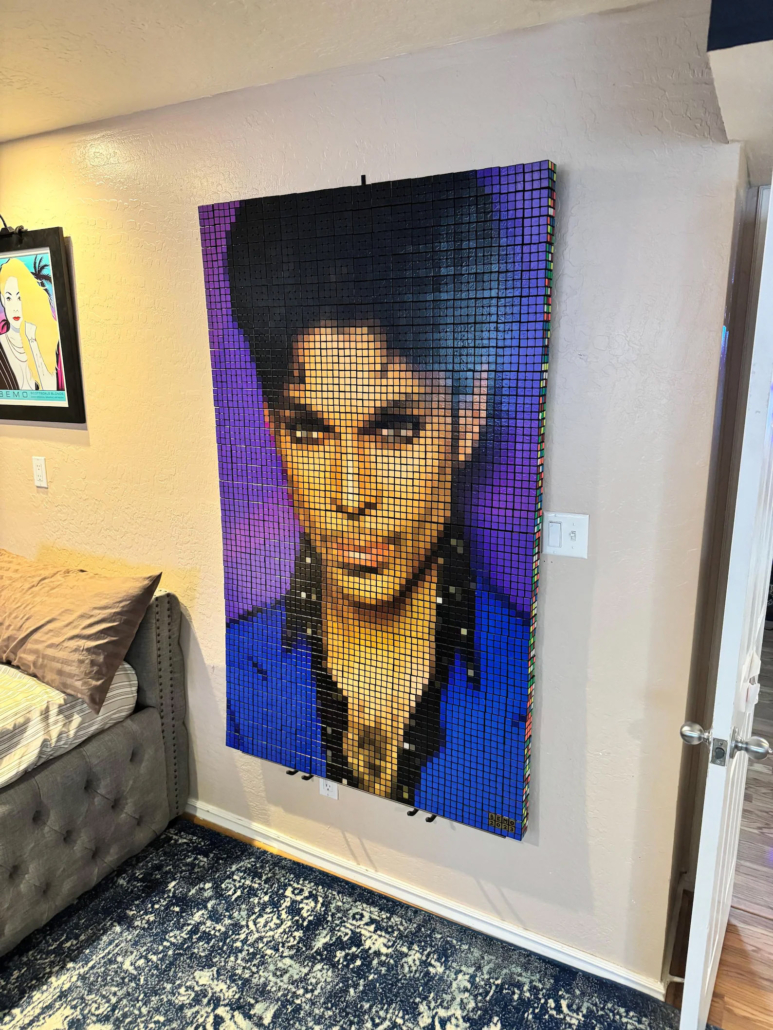
A crisp vector portrait, a textured drawing and a physical cube mosaic communicate differently. Start with the mood: playful, graphic, dramatic, restrained or nostalgic. Brian can then consider line, shape, palette and texture as part of one composition rather than applying a preset effect.
02
Make the deliverable explicit.
Digital illustration describes how art can be created or delivered; it does not automatically include a framed print or unlimited reproduction rights. Physical artwork has its own material, dimensions and handling requirements. Discuss the final use early so the proposal identifies what you will receive and how you may use it.
03
Bring a focused set of references.
A subject image, two or three visual references and a photograph of the destination are usually more useful than a large mood board with conflicting directions. Explain what you like about each reference. Brian develops an original response instead of promising to copy another artist’s work.
The Prince cube mosaic and archival drawing show how one subject can take very different forms. Your commission should have its own purpose and treatment.
YOUR PROJECT
Tell Brian what you have in mind.
Share the subject, approximate dimensions, display location and timing in the existing inquiry form. Mention that your project is an art commission. Brian will discuss the idea, current availability and the appropriate next step before a scope is agreed.
Do I have to choose between digital and physical art immediately?
No. Start with the intended use and space. Brian can discuss suitable options before the deliverable, production method and rights are agreed.
What should I send first?
Start with the subject or idea, approximate dimensions, a description of the space, your location and desired timing. Brian can explain which reference images or site details will help next.
Independent artwork by Brian Bemo. No affiliation with or endorsement by depicted artists, estates or brands is implied. Commercial and room mockups are concepts where labeled.