Local SEO Checklist Maricopa County: 12 Steps to Rank Locally
Start here: picture this, it is 2 AM and you are staring at your analytics dashboard wondering why Scottsdale and Phoenix calls are trickling in, while your competitor down the street keeps booking new clients. For small to mid-sized businesses, professional service providers, and established brands — think dental and medical practices, real estate firms, and local service companies across Scottsdale, Phoenix, and Maricopa County — local visibility changes the game. Use this practical checklist to stop guessing and start ranking, with specific steps that tie SEO, AI search optimization, Google Ads, and conversion strategy together. From Day 14 for early stage businesses, focus on high-intent pages, citation consistency, and conversion tracking to turn traffic into appointments.
Local SEO Checklist Maricopa County is your no-fluff playbook for tangible local gains.
Why this checklist matters now
Here is the thing, local search drives foot traffic and calls. 46 percent of all Google searches have local intent, and local visibility frequently outperforms broad organic tactics for service businesses. When you combine on-page SEO, Generative Engine Optimization, and actively managed Google Ads, you get predictable, scalable leads that convert. If you are a dental office in Tempe or a real estate agent in Mesa, this checklist helps you win the micro-moments that matter.
Local SEO Checklist Maricopa County: Step-by-step
Below are 12 focused steps you can implement in priority order. Treat this like a sprint plan: quick wins first, then durable systems.
1. Claim and optimize your Google Business Profile (GBP)
- Claim or verify your profile, use a real business phone number and hours, and list services precisely.
- Use a keyword-rich but natural description, and choose the correct primary category. Keep service-area settings tuned for Maricopa County cities you serve.
- Post weekly updates or offers to the GBP to signal activity.
- Resources: Google Business Profile help.
2. NAP consistency and local citations
- Make sure your Name, Address, and Phone number are identical across your website, GBP, local directories, and social profiles.
- Audit major citation sites and correct inconsistencies on platforms like Yelp, Bing, and industry directories.
- Consider a citation clean-up service if listings are messy.
- Helpful tool: Whitespark citation services.
3. Local keyword strategy and intent mapping
- Build a keyword map for high-intent phrases: "emergency dentist Scottsdale," "Phoenix real estate agent near me," "AC repair Mesa same day."
- Target 1 primary local keyword per service page, and support it with related queries in FAQ sections.
- Use localized content to capture long-tail “near me” searches.
4. On-page local signals and schema
- Add structured data for your business using schema.org/LocalBusiness. Include geo coordinates, business type, and service areas.
- Ensure title tags, meta descriptions, H1s, and image alt text include local modifiers naturally.
5. Create or optimize location pages
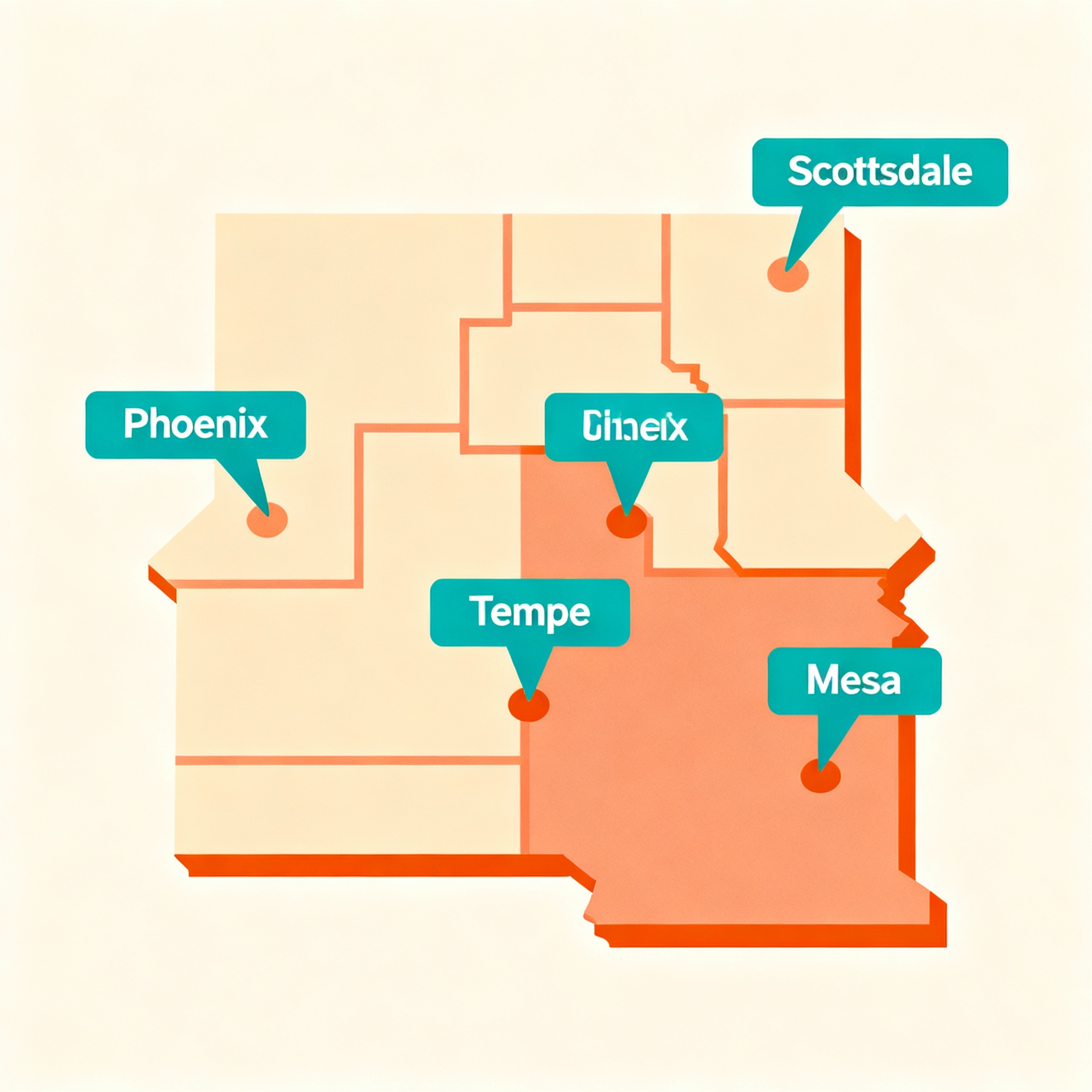
- If you serve multiple towns, create a unique, useful location page per city with local content, testimonials, and a map.
- Avoid thin doorway pages; each page must solve a local searcher’s question and have a conversion element.
6. Reviews and reputation management
- Make it easy for patients and clients to leave reviews on Google and industry review sites.
- Respond to reviews promptly, thank positive reviewers, and address concerns professionally.
- Use a review funnel: request reviews after completed appointments with a short link.
7. Local content that converts
- Publish local guides, case studies, and event recaps tied to Maricopa County neighborhoods.
- Use content to support service pages and answer common micro-moment queries.
- Example: "How to choose an Invisalign provider in Scottsdale, plus local payment options."
8. Local link building and community signals
- Earn links from local chambers, sponsor pages, local news, and industry organizations in Arizona.
- Host or participate in local events and get coverage that references your website.
9. Mobile performance and Core Web Vitals
- Ensure pages load fast on mobile, because most local searches happen on phones.
- Compress images, enable browser caching, and use a fast hosting stack.
- Test with Google PageSpeed Insights.
10. Local tracking, analytics, and attribution
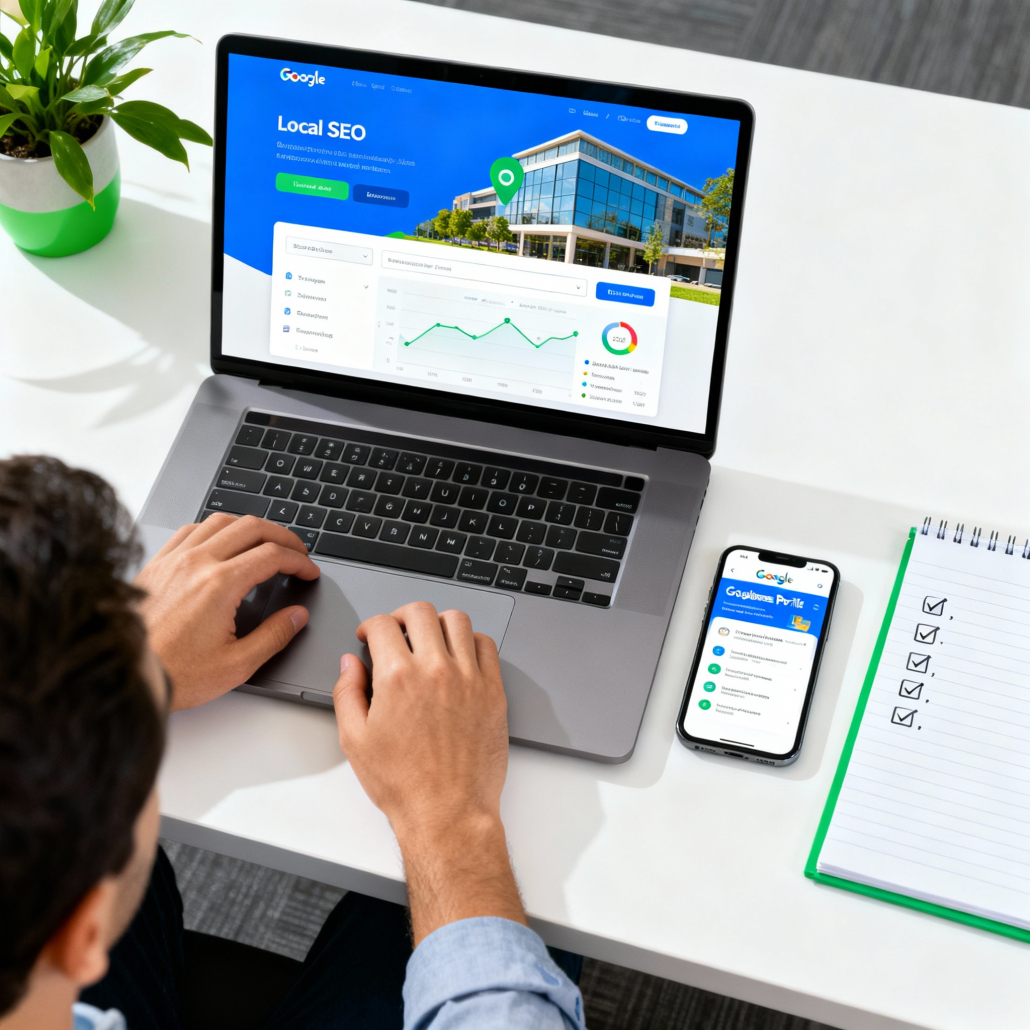
- Set up Google Analytics and conversion goals for phone calls, booking forms, and directions clicks.
- Use call-tracking numbers when running PPC campaigns to know which keywords drive calls.
- Tie offline conversions back to campaigns when possible.
11. Paid local ads and PPC optimization
- Run geographically targeted Google Ads and Local Services Ads for urgent-intent keywords.
- Use radius targeting and schedule ads for business hours when staff can take calls.
- Align landing pages to ad intent, then measure CPL and optimize.
- Resource: Google Ads overview.
12. AI SEO, GEO AI, and generative optimization
- Use AI to ideate local content headlines, but human-edit for locality and accuracy.
- Optimize for generative snippets by answering clear, local questions and using concise FAQ markup.
- Monitor AI-driven SERP features for your core queries, and adapt content to appear in those features.
Quick technical checklist
- Robots.txt and XML sitemap present and submitted to Google Search Console.
- HTTPS enforced and no mixed content issues.
- Mobile-friendly pages and accessible contact info above the fold.
- Structured data testing passed and localized meta tags implemented.
- Regular backups and uptime monitoring.
Measurement and KPIs
- Primary: Local conversions, phone calls, booked appointments, new client revenue.
- Secondary: Local ranking positions, GBP impressions and actions, organic traffic from target cities.
- Set weekly reports for top keywords and monthly business reviews to adjust budget between SEO and Google Ads.
A short anecdote
A dental client in north Phoenix launched a focused location page plus five GBP posts and saw calls from their target zip codes double in six weeks. The trick was pairing a conversion-optimized page with a small paid budget for the top 3 keywords, then asking new patients to review the practice. Simple sequence, big impact.
Common objections and how to handle them
- "SEO takes too long": Start with GBP fixes and citation cleanup to get faster wins while content matures. Pair with targeted Google Ads for immediate visibility.
- "We do not have content resources": Repurpose FAQs, appointment guides, and client stories into pages and GBP posts.
- "We tried reviews but got few": Build a short review workflow and incentivize staff to ask after positive interactions.
Tools and resources
- Google Business Profile help: https://support.google.com/business/answer/3038063
- Local SEO primer: https://moz.com/learn/local/what-is-local-seo
- Local testing and tracking: https://developers.google.com/search/docs/essentials/local-search
- Citation tools and services: https://whitespark.ca/
Next steps and 30-day sprint plan (fast-action)
- Days 1 to 7: Claim GBP, fix NAP, publish 1 conversion landing page, implement schema.
- Days 8 to 14: Launch a small geo-targeted Google Ads test, set up call tracking, request 10 reviews from recent clients.
- Days 15 to 30: Publish 2 local content pieces, build 3 local links, audit mobile speed and fix Core Web Vitals issues.
Conclusion and call to action
If you want reliable local leads across Maricopa County, start with the quick wins: GBP, NAP consistency, one optimized location page, and a small Google Ads test. Then scale with content and local PR. Need help implementing this sprint? Let us audit your GBP and local pages, map a 30-day plan, and get you booked out.