Corporate Web Design Checklist B2B: 12 Steps to High-Converting Sites
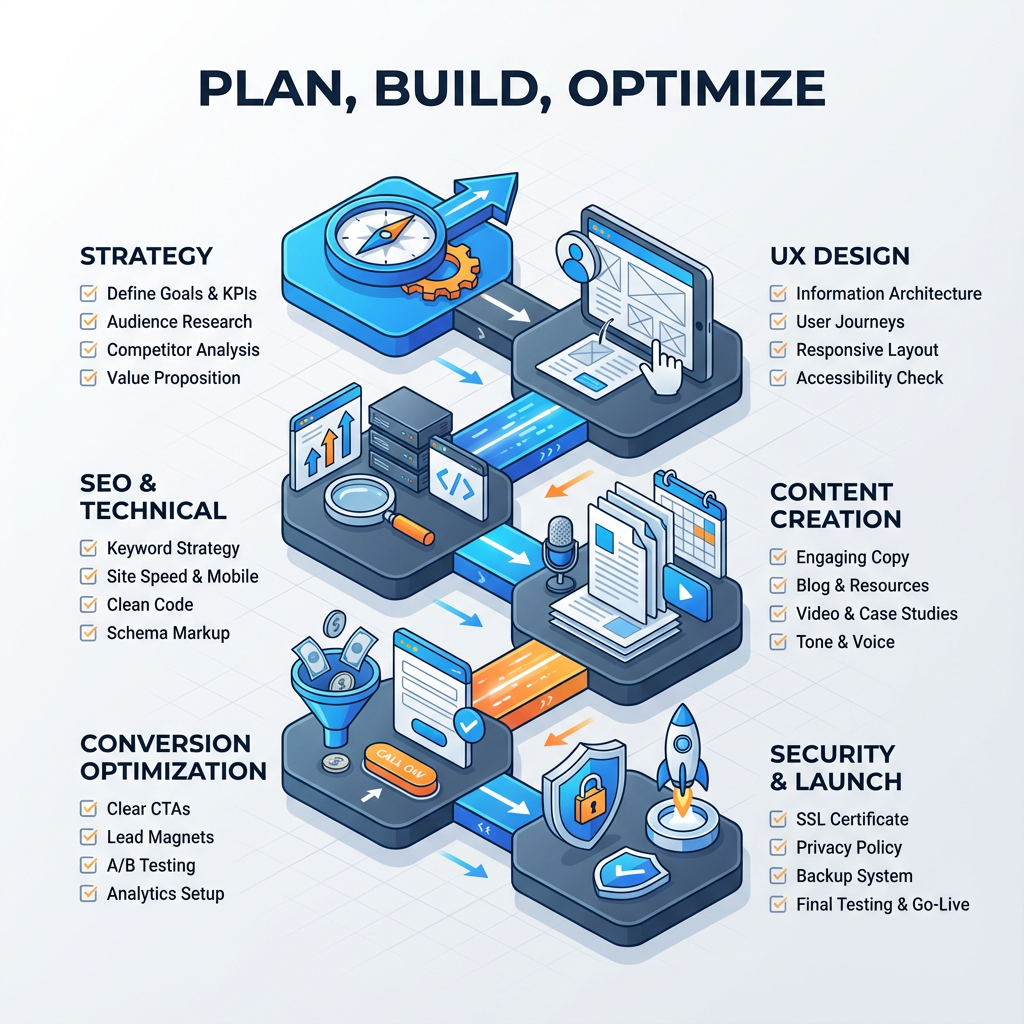
Corporate web design checklist b2b starts with strategy, not visuals. If you want a B2B website that builds trust, generates qualified leads, and shortens sales cycles, you need a repeatable process. This checklist distills what I use with clients across industries to move prospects from arrival to action, while protecting brand integrity and search visibility.
Use this checklist to audit a live site, scope a redesign, or guide a new build. I include design, content, technical SEO, CRO, accessibility, and launch tasks — all focused on B2B buyer journeys.

Executive summary
This checklist covers 12 core areas every B2B corporate site must get right: strategy & messaging, information architecture, UX & design, technical SEO, content strategy, lead capture, performance & security, accessibility, analytics & tracking, conversion optimization, launch checklist, and post-launch growth. Follow the steps in order, or use them as a prioritized audit plan.
1. Define goals, audience, and measurement
Clarify business goals
- Identify primary conversion (demo request, contact form, RFP download).
- Set SMART targets for traffic, leads, and conversion rate.
Map B2B buyer personas and journeys
- Map decision-makers, influencers, and procurement timelines.
- Create content and CTAs for each stage: awareness, evaluation, decision.
Setup KPIs and reporting
- Decide tools (Google Analytics, GA4, CRM integration).
- Create a reporting cadence and dashboard.
2. Messaging and brand clarity
- Lead with a concise hero value statement, benefits, and social proof.
- Use customer-focused language, not product-only copy.
- Include a clear primary CTA above the fold.
3. Information architecture and navigation
- Organize pages by audience and service, not internal teams.
- Keep top navigation minimal, group services under logical hubs.
- Add a visible search and persistent contact options.
4. UX and visual design for trust
Design fundamentals
- Use consistent typography, spacing, and brand colors.
- Prioritize a clean layout that highlights case studies and outcomes.
Trust signals
- Prominently display logos, certifications, client testimonials, and case studies.
- Use buried content sparingly; make conversion pathways obvious.
5. Content strategy and page templates
- Build templates for service pages, case studies, team bios, and resources.
- Use client-focused headlines, clear outcomes, and data-driven results.
- Include downloadable assets gated correctly for lead capture.
6. Technical SEO and on-page optimization
- Ensure unique, keyword-focused title tags and meta descriptions for every page.
- Use semantic headings (H1, H2) and structured data for reviews, organization, and FAQs.
- Optimize internal linking to guide crawlers and users toward conversion pages.
- Run performance checks on Google PageSpeed Insights and fix high-impact issues. Google PageSpeed Insights
7. Mobile-first and performance
- Design mobile-first experiences — B2B buyers often start on phones.
- Compress assets, defer noncritical scripts, and implement server-side caching.
- Target load times under 2.5 seconds for key landing pages.
8. Lead capture and conversion optimization
- Offer value exchanges: consultation, ROI calculators, whitepapers.
- Keep forms short, progressive profiling, and use Smart CTAs for returning visitors.
- A/B test headlines, CTAs, and form positions to find incremental lifts.
9. Security, privacy, and compliance
- Use HTTPS sitewide and maintain valid TLS certificates.
- Create clear privacy and cookie notices, and ensure GDPR/CCPA workflows if needed.
- Maintain secure hosting and timely CMS/plugin updates.
10. Accessibility and inclusivity
- Aim for WCAG AA: proper color contrast, keyboard navigation, alt text for images.
- Test with automated tools and manual keyboard/screen reader checks.
11. Analytics, tracking, and attribution
- Configure GA4, conversion events, and cross-domain tracking if required.
- Integrate with CRM (HubSpot, Salesforce) so marketing leads are trackable to revenue.
- Use UTM tagging and server-side tracking for more reliable attribution.
12. Launch checklist and post-launch tasks
- Pre-launch: canonicalization, robots.txt, sitemap.xml, redirects, and staging QA.
- Launch day: monitor 404s, core vitals, server errors, and traffic drops.
- Post-launch: crawl the site, monitor search rankings, and iterate based on analytics.
Quick B2B conversion hacks
- Add short video case studies on service pages to increase time on page.
- Use gated ROI calculators for mid-funnel leads.
- Place phone number and contact button in the header and footer, make phone clickable: Call (480) 600-2477.
Frequently asked questions
What pages should every corporate B2B site include?
At minimum: Home, Services (or Solutions), Industries, Case Studies, About, Contact, Careers, Privacy Policy, and Resources or Insights.
How do I prioritize which pages to redesign first?
Start with high-traffic and conversion pages like Home, primary service pages, and top case studies. Use analytics to prioritize pages with high bounce or low conversion.
How important is SEO for B2B websites?
Critical. B2B buyers research extensively. Technical SEO, content depth, and authoritative case studies shorten sales cycles and improve qualified traffic.
Should I use stock images or photography of my team?
Use a mix. Authentic team photos build trust while stylized imagery can illustrate abstract services. Prioritize authentic client-facing visuals where possible.
How long does a corporate redesign usually take?
Typical timelines are 8 to 16 weeks for design, content, and development, depending on scope and integrations.
How do I measure ROI from a web redesign?
Track lead volume, lead quality (SQLs), conversion rate, average deal size, and payback period. Integrate website leads with your CRM for full attribution.
When should we use a B2B web design agency?
When you need proven processes, faster time-to-value, and integrated SEO and CRO expertise. Working directly with specialists like Bemo Design ensures hands-on strategy and measurable results.
Get expert help
If your corporate site needs a practical, ROI-focused redesign, we help B2B companies with strategy, design, and AI-powered SEO. Learn how we approach B2B web projects at Bemo Design and schedule a free consultation: Book a Call with Bemo. You can also run a free AI SEO audit to spot quick wins: Free AI SEO Audit.
Summary
Follow this corporate web design checklist to align strategy, UX, technical SEO, and conversion optimization. Prioritize buyer journeys, measure results, and iterate. For hands-on help and a local Scottsdale partner, reach out to Bemo Design — we work directly with you to turn your website into a predictable lead engine.
About Bemo Design
Bemo Design is a Scottsdale-based marketing agency led by Brian Bemo, delivering high-impact SEO, Google Ads, and AI-powered marketing strategies for businesses of all sizes. With over 25 years of experience, Bemo Design helps companies grow through trusted, hands-on service, transparent communication, and measurable results.
We specialize in helping Arizona businesses dominate online search and future-proof their visibility across Google, Bing, and AI-driven platforms like ChatGPT and Google SGE.
Our Top Services:
- SEO Services
- GEO AI SEO
- Google Ads Management
- Web Design
- Website Redesign
- Logo Design & Branding
- Graphic Design & Print
Ready to grow? 📞 Call (480) 600-2477 or Book a Call with Bemo. Run a Free AI SEO Audit to see quick opportunities and next steps.