How Generative AI Changes SEO Strategy for Local Businesses Today

How you approach search optimization is changing fast, and you need a plan that works for Small to mid-sized businesses, professional service providers, and established brands that want measurable growth. How Generative AI Changes SEO Strategy is not theory, it is practical, and it matters for dental and medical practices, real estate teams, and local service businesses in Scottsdale, Phoenix, and Maricopa County looking for modern websites, higher visibility, and better ROI.
Why this matters now
Generative AI is altering how people discover answers online, and search engines are adapting by producing synthesized answers, AI summaries, and more personalized results. That means two big shifts for your marketing plan. First, search can deliver answers without a click, so visibility and brand signals matter even when direct traffic drops. Second, AI systems evaluate signals differently, favoring verifiable authority, structured data, and clear author identity.
Here is the thing, you cannot treat AI as a content factory. You have to build trust, show human expertise, and make your content machine friendly at the same time. That balance is the new skillset for SEO and paid search management.
How Generative AI Changes SEO Strategy For Your Business
Generative AI changes SEO strategy in practical ways you can implement this quarter, from content creation workflows to how you measure success.
1) Shift from keyword stuffing to answer engineering
- Focus on intent, not just keywords. Map conversational queries and follow-up questions that an AI might synthesize.
- Produce short, authoritative answers that an AI can quote and longer pages that support the answer with depth and sources.
- Use structured data and clear author bylines so machine readers know who to trust. See Google Search Central for structured data best practices: Google Search Central.
Actionable takeaway: Create a "question and short answer" block near the top of key pages so AI systems can easily extract a concise response.
2) Prioritize E-E-A-T, human authorship, and earned media
- Showcase first-hand experience, results, case studies, and named authors. AI systems prefer verifiable expertise.
- Earn mentions and citations on credible third-party sites, because AI often favors earned authority when choosing sources for answers. For an industry perspective, read this guide: Search Engine Journal on generative AI and SEO.
Actionable takeaway: Convert one long-form case study into a short, machine-friendly summary with clear facts and a named author.
3) Optimize for Generative Engine Optimization and GEO AI SEO
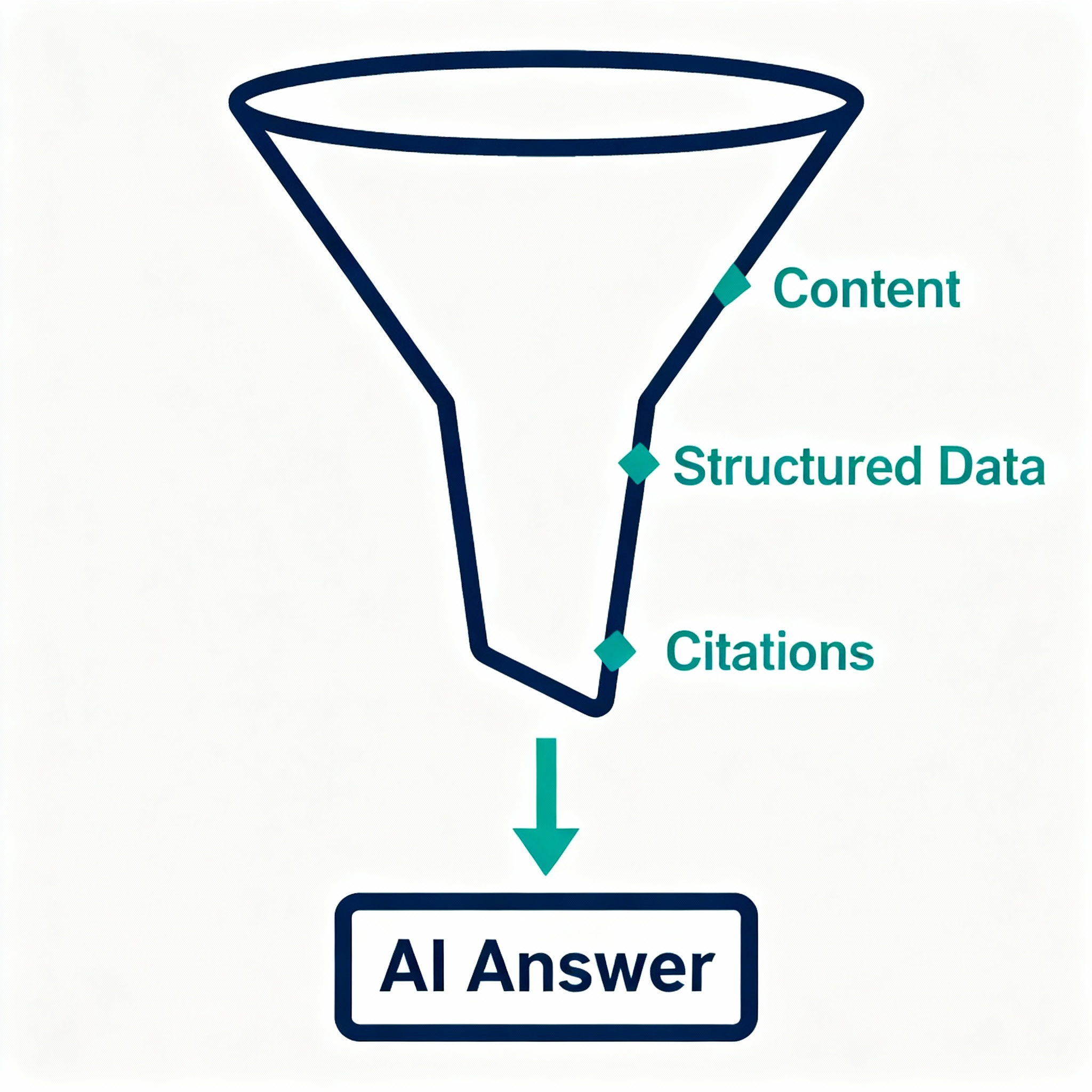
- Treat AI-driven surfaces as distinct engines. Generative Engine Optimization means formatting content so AI can extract and justify answers, including citations and timestamps.
- Use location signals and local schema to win AI results for local queries, which is essential for dental, medical, and real estate businesses in Scottsdale and Phoenix.
Actionable takeaway: Add LocalBusiness schema, service schema, and event schema where relevant, then test how snippets look in tools and live search.
4) Combine AI SEO with smarter PPC and Google Ads management
- Use AI to generate hypothesis-driven ad copy variations and landing page summaries, then test performance in real campaigns.
- When search surfaces provide answers directly, reinforce brand presence with well-structured landing pages and smart bidding strategies that prioritize conversions over clicks.
Actionable takeaway: Sync your paid search landing page content with the short answer blocks you create for organic AI visibility.
5) Automate audits, not strategy
- AI tools speed up site audits, content gap analysis, and tag generation, but human strategy remains crucial. AI highlights opportunities, and you prioritize by business value.
- Focus on conversion metrics, not only traffic, because more AI summaries may mean fewer clicks but higher quality leads if content is built right.
Actionable takeaway: Run an AI audit monthly and prioritize the top three fixes that will move leads and revenue.
Measuring success differently
- Track brand visibility and mention share, not just organic sessions.
- Monitor zero-click placements, featured snippet prevalence, and assistive AI citations.
- Measure leads and ROI from search-driven interactions, and align reports with revenue, not only rank.
Helpful reading on how search is evolving: reliable reporting on AI search experiments and implications for publishers is available from mainstream outlets, for example this technology coverage: Reuters technology reporting on AI search tests.
Practical first steps you can take this month
- Run an AI-focused SEO audit and add structured data to your priority pages. Use the free AI SEO Audit tool to identify gaps: Free AI SEO Audit.
- Update 3 high-value pages with short machine-readable answer blocks and author bios.
- Build 1 outreach plan per quarter to earn citations on trusted local publications, partners, or industry sites.
- Align ads with answer-based landing pages and test conversion rates.
Frequently Asked Questions
Q: How soon will AI search reduce my website traffic?
A: It depends on your vertical and content types. Some niches see more zero-click results sooner, especially informational queries. Focus on conversion optimization and brand signals since AI visibility often boosts brand awareness even when clicks fall.
Q: Do I have to stop publishing long blog posts?
A: No. Long-form content is still valuable for depth and authority. Add concise machine-readable summaries at the top to serve both human readers and AI answer systems.
Q: Should we use generative AI to write all our content?
A: Use AI to draft and scale, but always add human expertise, verification, and unique local details that machines cannot invent.
Q: What role does local SEO play in an AI-first world?
A: Local signals, Google Business Profile optimization, and local schema grow more important because AI answers for local queries rely on clear location data and trusted local sources.
Q: How do we measure ROI when clicks drop but leads stay steady?
A: Shift reporting to lead quality, call volume, booked appointments, and revenue per lead. Connect analytics with CRM outcomes and attribute conversions to search-assisted interactions.
Ready to Get Started?
If you want help future-proofing your SEO and Google Ads, we make this practical and measurable. Brian Bemo and the Bemo Design team combine hands-on strategy, GEO AI SEO expertise, and 25 plus years of experience to help Scottsdale and Phoenix businesses grow. Start with a free AI SEO Audit or book a short strategy call, and we will show which quick wins move the needle.
Call us at 📞 (480) 600-2477 or schedule a meeting, and we will walk you through an AI-first SEO plan that actually converts. Learn more or get started at Bemo Design.
Summary
Generative AI is changing the rules for search. Instead of only optimizing for keywords, you must optimize for extractable answers, author credibility, and structured signals so AI systems will reference your business. Combining GEO AI SEO, strong local signals, and conversion-focused PPC will help dental, medical, real estate, and local service businesses in Scottsdale and Phoenix win in this new landscape.
About Bemo Design
Bemo Design is a Scottsdale-based marketing agency led by Brian Bemo, delivering high-impact SEO, Google Ads, and AI-powered marketing strategies for businesses of all sizes. With over 25 years of experience, Bemo Design helps companies grow through trusted, hands-on service, transparent communication, and measurable results.
We specialize in helping Arizona businesses dominate online search and future-proof their visibility across Google, Bing, and AI-driven platforms like ChatGPT and Google SGE.
Our Top Services:
Ready to grow? Book a Call with Bemo or run a Free AI SEO Audit.