Google Ads Management for Small Business: A Practical Guide

Small businesses do not need more clicks, they need more customers. That is the real difference between running ads and building a lead generation system that actually pays off.
If you have ever opened a dashboard and wondered why traffic went up but calls did not, you are not alone. Google Ads management for small business works best when every campaign is built around intent, tracking, and conversion, not vanity metrics.
Why Google Ads Can Work So Well for Small Businesses
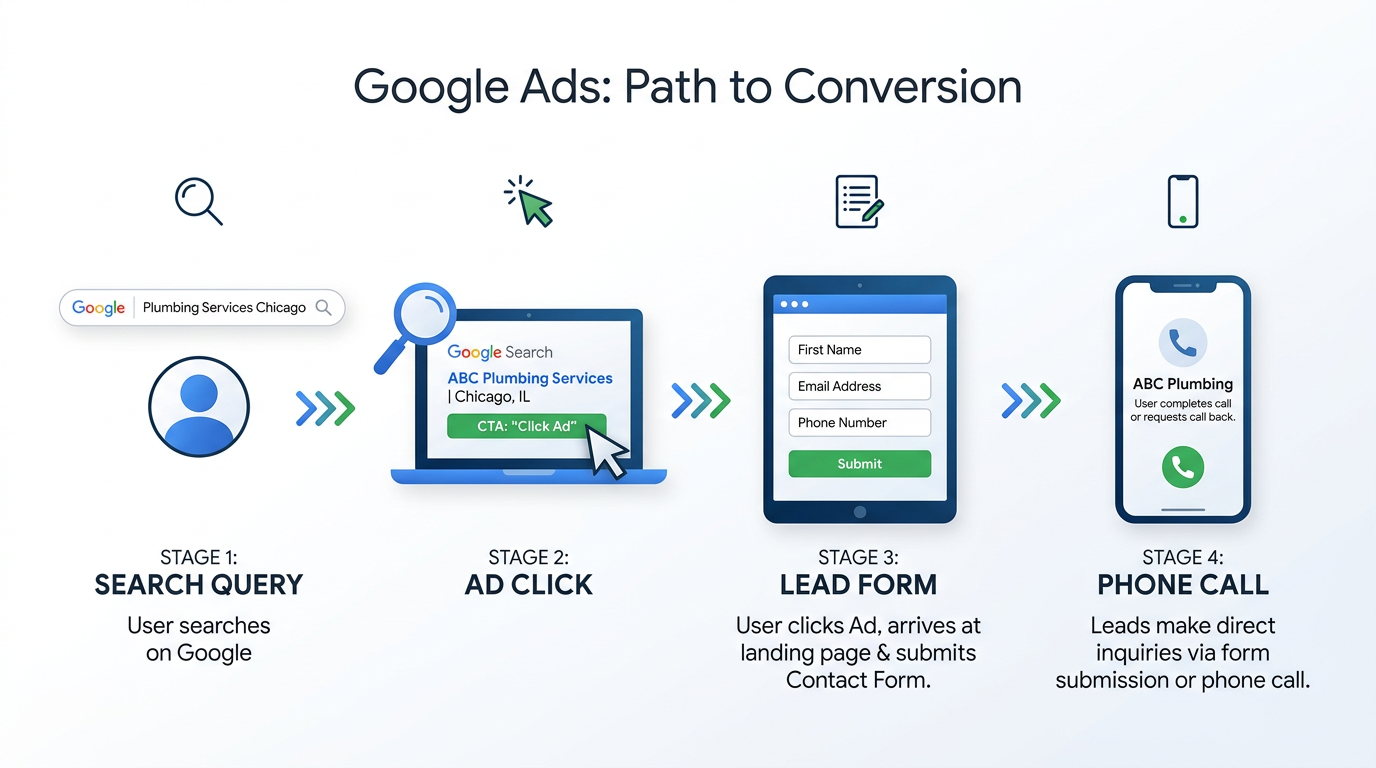
Google Ads lets you show up exactly when someone is searching for a product or service you offer. That means you are reaching people who already have buying intent, which is why paid search can be one of the fastest ways to generate leads.
For small businesses, that speed matters. You do not always have months to wait for organic rankings, especially if you are competing in Scottsdale, Phoenix, or across Maricopa County.
The Real Advantage Is Control
With the right setup, you can control:
- Who sees your ads
- What keywords trigger them
- What locations you target
- How much you spend
- Which calls to action drive leads
That level of control makes Google Ads especially useful for dental practices, real estate teams, medical offices, and local service companies.
What Small Business Google Ads Management Should Include
Good campaign management is more than turning ads on. It is a process.
1. Keyword Strategy
You want high-intent terms, not broad curiosity clicks. For example, someone searching “emergency dentist Scottsdale” is far more likely to convert than someone searching “how teeth work.”
2. Landing Pages That Convert
Sending traffic to a generic homepage is one of the fastest ways to waste budget. A focused landing page should match the ad, answer the prospect’s question, and make it easy to call or fill out a form.
3. Conversion Tracking
If you cannot track calls, forms, bookings, and quote requests, you are flying blind. Strong management means setting up tracking before scaling spend.
4. Ongoing Optimization
Campaigns should be reviewed regularly to adjust bids, search terms, ad copy, location targeting, and device performance. That is where ROI improves over time.
Common Mistakes Small Businesses Make
A lot of businesses assume Google Ads is expensive because they have seen poor results. Usually, the problem is not the platform, it is the setup.
Paying for the Wrong Traffic
Broad keywords can drain budget fast. If your ads are too general, you will attract people who are researching, not buying.
Ignoring Location Targeting
A local business should not waste spend on clicks outside its service area. Tight geographic targeting is one of the easiest ways to improve efficiency.
Not Testing Ad Copy
Sometimes a small shift in wording makes a huge difference. A stronger call to action, a clearer offer, or a more specific headline can lift conversion rates.
Skipping AI Search Visibility
Search is changing. Businesses also need to show up in AI-driven discovery, not just traditional search results. That is why combining paid ads with SEO and GEO AI SEO gives you a stronger long-term edge. If you want to improve both channels, explore Google Ads Management and GEO AI SEO Services.
What Makes Bemo Design Different
Bemo Design is not a faceless agency. With more than 25 years of experience, Brian Bemo takes a hands-on approach to strategy, ads, and conversion-focused marketing.
That matters because small business owners need more than reports. They need clear communication, honest feedback, and campaigns built to generate real leads and calls.
If you are also improving your site, Web Design and Website Redesign can make your ads perform better by increasing trust and conversions.
How to Know If Your Ads Are Working
You do not need a massive dashboard. You need a few key numbers that tell the truth.
Watch These Metrics
- Cost per lead
- Call volume
- Form submissions
- Conversion rate
- Search terms quality
- Return on ad spend
If those numbers are improving, your campaigns are heading in the right direction. If they are not, the campaign needs refinement, not more budget.
FAQ
How much should a small business spend on Google Ads?
There is no single number that fits every business. A local company may start with a modest monthly budget, then scale once it sees which keywords and landing pages convert best.
How long does it take to see results?
You can often see traffic and clicks quickly, but lead quality and cost efficiency usually improve after testing and optimization over several weeks.
Is Google Ads better than SEO?
They work best together. Google Ads can generate faster leads, while SEO and AI search optimization build long-term visibility and lower acquisition costs.
Do I need a landing page for every campaign?
In most cases, yes. A dedicated page usually converts better than sending visitors to a homepage because it stays focused on one service and one action.
Can Google Ads work for service businesses?
Absolutely. Service businesses often benefit the most because they rely on high-intent searches and local targeting to drive calls and booked appointments.
Why hire a specialist instead of managing it myself?
Because the difference between average and profitable campaigns is often in the details, keyword selection, tracking, ad structure, and conversion strategy. A specialist helps you avoid wasting budget.
Ready to Turn Clicks Into Real Leads?
If you want Google Ads that bring in calls, forms, and actual business, Bemo Design can help. You can start with a Free AI SEO Audit or book a free strategy call to talk through your goals.
You can also call (480) 600-2477 to speak directly with the team.
Conclusion
Google Ads can be a powerful growth channel for small businesses, but only when it is managed with intent and precision. The goal is not just more clicks, it is more qualified leads, better ROI, and a system that supports long-term growth.
If you want a Scottsdale-based team that understands both Google search and AI search visibility, Bemo Design brings the experience, transparency, and hands-on approach that small businesses need.